AI⁴M Lab
AI⁴M Lab at DGIST

Advanced Intelligence for Materials

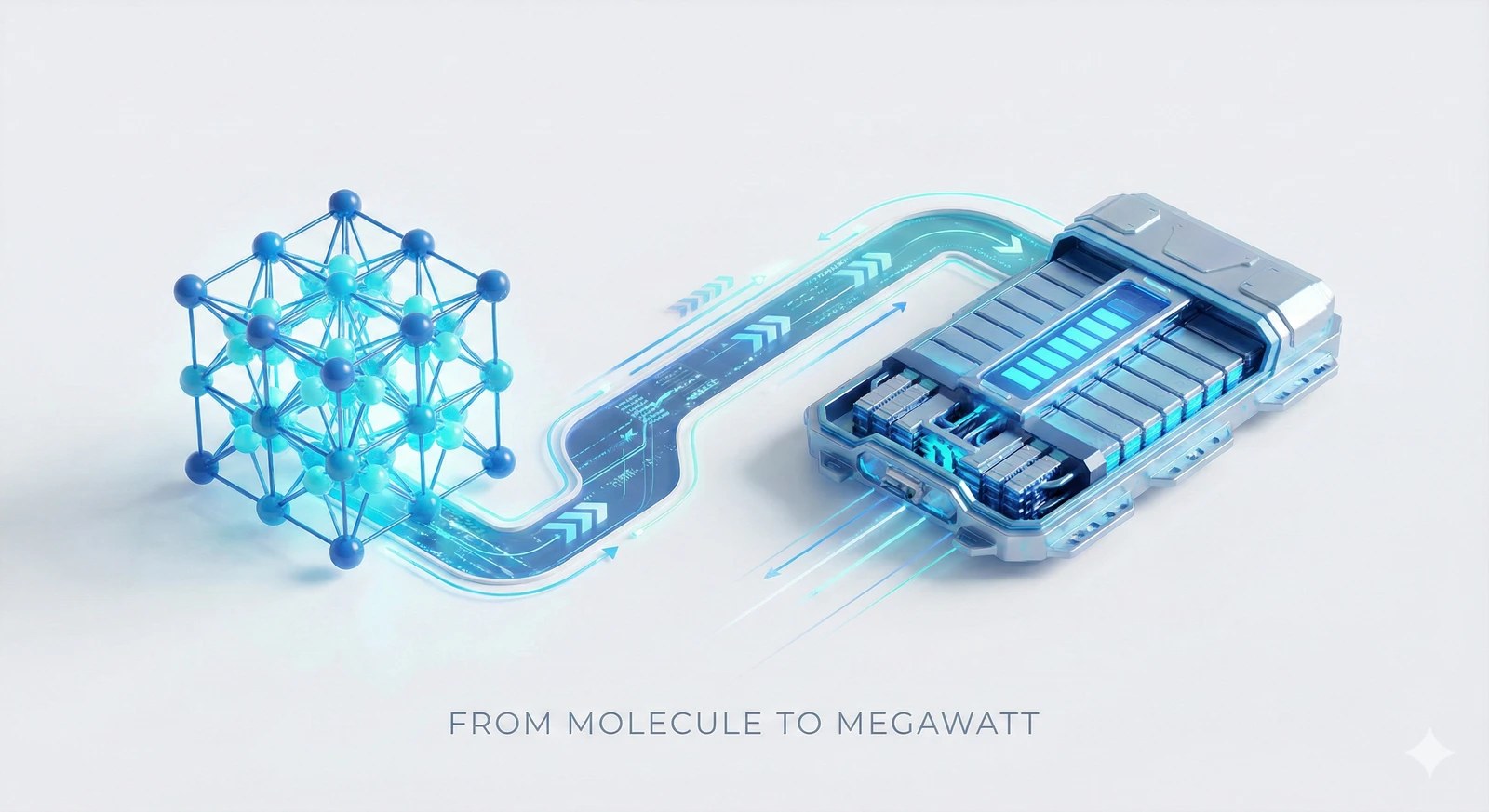
Welcome to the AI⁴M Lab. We develop AI-driven workflows that integrate theory, experiments, and data in a closed-loop research infrastructure to accelerate the discovery and optimization of next-generation battery and energy materials.

ComputationExperimentData

Research

Energy materials research driven by data and AI

1

1. Physics-Informed AI Design

Accelerating Discovery with DFT & MLIP
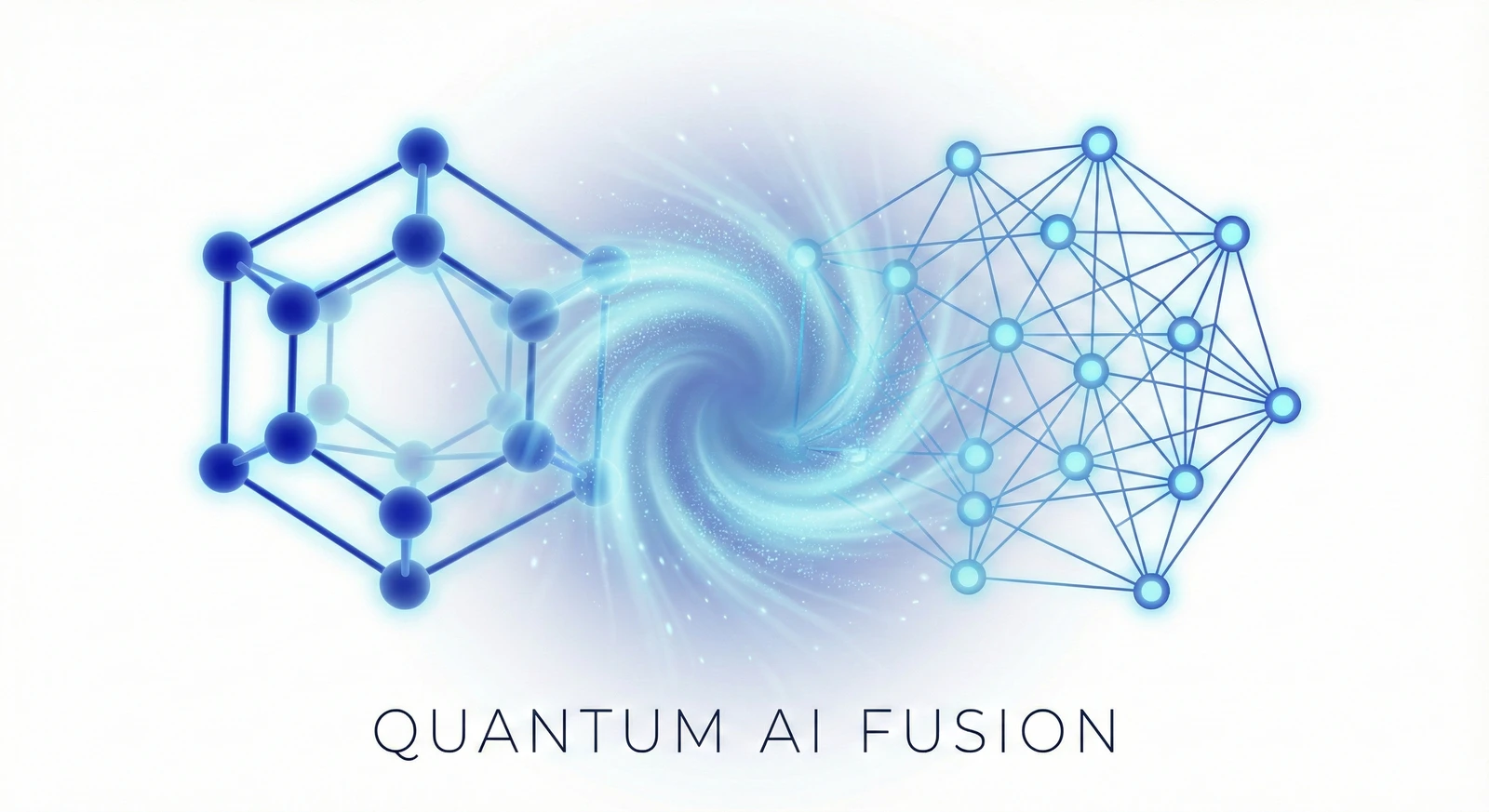
Physics-Informed AI

We combine the accuracy of physical theory with the speed of AI in the first stage of materials discovery to revolutionarily expand the exploration space.

  • DFT & MLIP: By combining quantum mechanics-based first-principles calculations (DFT) with Machine Learning Interatomic Potentials (MLIP) that accelerate them, we perform large-scale atomic simulations and elucidate complex reaction mechanisms.
  • Virtual Screening: Through ultra-fast Virtual Screening that explores vast chemical spaces, we precisely predict promising candidate materials and optimal properties before experimental stages.
2

2. Autonomous Research Systems

Realizing Closed-Loop Discovery Beyond Human Intuition

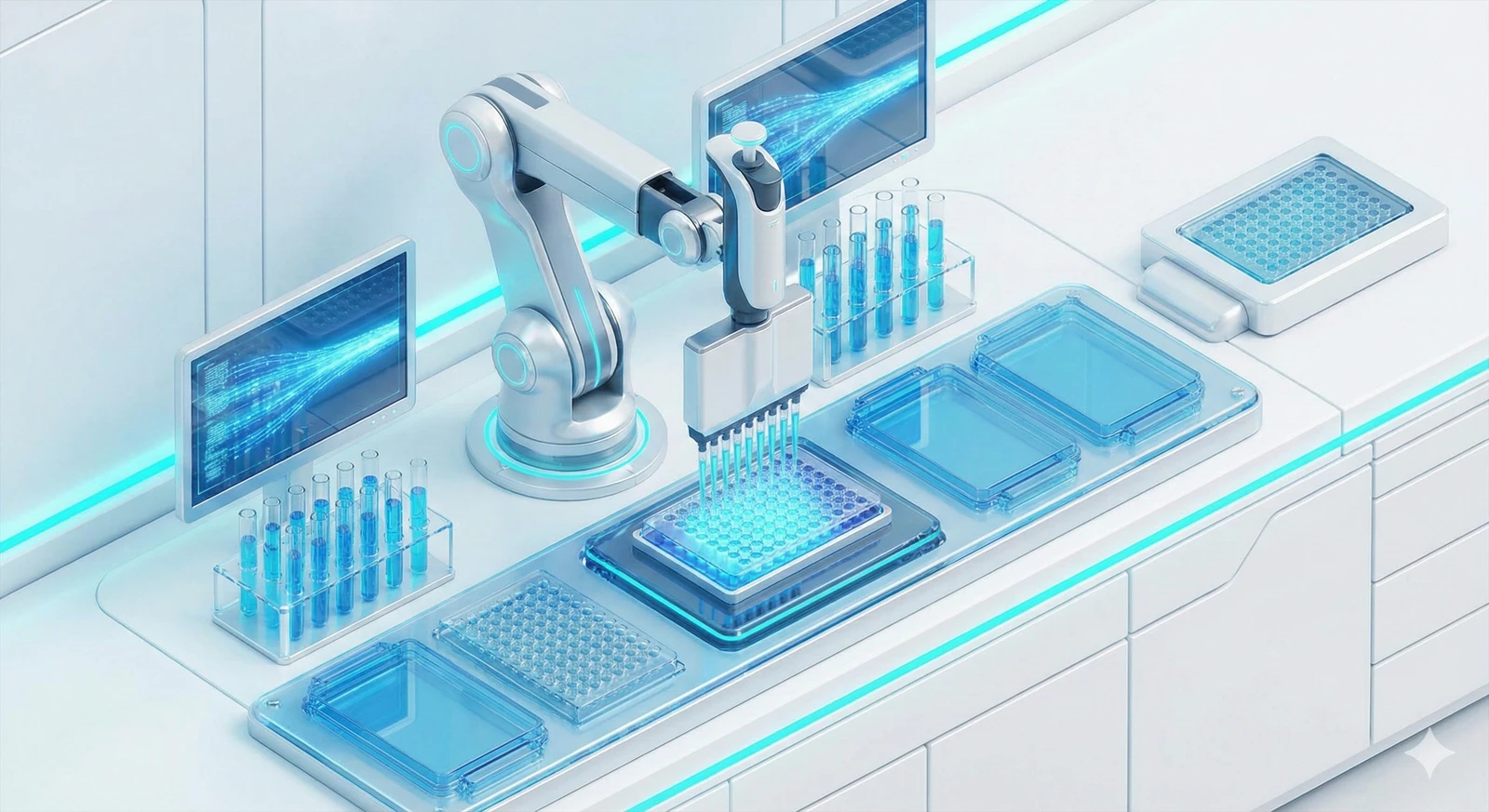
Autonomous Research

We automate repetitive and resource-intensive experimental processes and implement a Self-Driving Lab where AI designs the next experiments autonomously.

  • Closed-Loop Discovery: We connect the entire research process—from material design, synthesis, analysis, to evaluation—in an automated loop.
  • AI-Guided Optimization: AI-based optimization algorithms learn from experimental data in real-time, minimizing the number of experiments needed.
  • Beyond Human Intuition: Through data-driven exploration, we discover new chemical compositions and innovative materials that transcend researcher experience and human intuition.
3

3. Lab-to-Fab Scaling

Bridging the Gap via Process Modeling & Multiscale Analysis

Lab-to-Fab

We research data-driven scale-up technologies so that basic research achievements in the laboratory can translate to mass production processes in actual industrial settings.

  • Multiscale Analysis: We perform Multiscale Analysis spanning from microscopic properties to macroscopic performance, elucidating the correlations between materials and systems.
  • Process Modeling: Through Process Modeling and digital twins that learn the relationships between data and process variables, we predict performance in manufacturing processes and reduce trial and error.

What We Build

From lab discovery to manufacturing — what we create

AI Models

MLIPs, generative and surrogate models that predict material properties and reactions.

Datasets

Integrated datasets accumulated through a closed loop of computation, experiment, and characterization.

Experimental Workflows

Self-driving lab workflows bridging autonomous experiments and AI optimization.

Material Candidates

Next-generation battery and energy material candidates with scalable processes.

Team

Principal Investigator

Inchul Park, PhD

Inchul Park, PhD

Principal Investigator

We aim to innovate the paradigm of energy materials research using artificial intelligence.

Ph.D. Students

HyoJin Kim

HyoJin Kim

PhD Course

Research Field: First principles calculation, Battery materials

DFTBattery Materials
Suhyun Kim

Suhyun Kim

PhD Course

Research Field: Materials Synthesis and Development of Battery Materials

Battery MaterialsMaterials Synthesis

Publications

Selected Highlights
2026Materials Horizons, 2026,13, 727-735. [Front Cover]

Generative Inverse Design for Microstructure Control in Li– and Mn–Rich Layered-Oxide Precursors

Geunho Choi†, Changhwan Lee†, Jieun Kim, Insoo Ye, Keeyoung Jung*, and Inchul Park*

View Paper
2025ACS Energy Letters, Vol 10, 5414–5421.

Machine Learning-Accelerated Development of High-Nickel NCM Cathodes via Multi-Variable Co-optimization

Seon Hwa Lee†, Insoo Ye†, Changhwan Lee, Jieun Kim, Sang-Cheol Nam*, and Inchul Park*

View Paper
2025Energy and Environmental Science, Vol 18(9), 4222.

Data-driven insights into reaction mechanism of Li-rich cathodes

Jieun Kim†, Injun Choi†, Ju Seong Kim, Hyokkee Hwang, Byoungyong Yu, Sang-Cheol Nam, and Inchul Park*

View Paper
All Publications

2025

Seon Hwa Lee†, Insoo Ye†, Changhwan Lee, Jieun Kim, Sang-Cheol Nam*, and Inchul Park* "Machine Learning-Accelerated Development of High-Nickel NCM Cathodes via Multi-Variable Co-optimization" ACS Energy Letters, Vol 10, 5414–5421.
View Paper
Jieun Kim†, Injun Choi†, Ju Seong Kim, Hyokkee Hwang, Byoungyong Yu, Sang-Cheol Nam, and Inchul Park* "Data-driven insights into reaction mechanism of Li-rich cathodes" Energy and Environmental Science, Vol 18(9), 4222.
View Paper
Youngsu Lee, Jaesub Kwon, Jong-Heon Lim, Eunseong Choi, Kyoung Eun Lee, Shin Park, Docheon Ahn, Changshin Jo, Yong-Tae Kim, Yoon-Uk Heo, Inchul Park*, and Kyu-Young Park* "Elucidating and controlling phase integration factors in Co-free Li-rich layered cathodes for lithium-ion batteries" Materials Horizons, Vol 12(11), 3731. [Back Cover]
View Paper
Sang-Wook Park†, Hojoon Kim†, Sangwook Han, Kyoung Sun Kim, You-Yeob Song, Hyun-Gi Lee, Wonyoung Jang, Dae-Hyung Lee, Seongjae Bae, Dongwoo Kim, Jung Woo Park, Inchul Park, Sang-Cheol Nam, Hyungsub Kim, Jinhyuk Lee, Kisuk Kang*, Dong-Hwa Seo* "High-Throughput Synthesis of Mn-Based Disordered Rock-Salt Li-Ion Cathodes with Improved Rate Capability via Rapid Joule-Heating" Advanced Energy Materials, e03496.
View Paper
Min Gee Cho, Colin Ophus, Jung-Hoon Lee, Inchul Park, Dong Young Chung, Jeong Hyun Kim, Dokyoon Kim, Yung-Eun Sung, Kisuk Kang, Mary C Scott, A Paul Alivisatos, Taeghwan Hyeon*, and Myoung Hwan Oh* "Design Principles in Engineering of Multigrain Nanocatalysts via Multiscale Electronic Structure Characterization" Chemistry of Materials, Vol 37(19), 7741–7752.
View Paper
Seok Hyun Song, Kyoung Sun Kim, Seokjae Hong, Jong Hyeok Seo, Ji-Hwan Kwon, Minjeong Gong, Jung-Je Woo, Inchul Park, Kyu-Young Park, Dong-Hwa Seo, Chunjoong Kim, Hyeokjun Park, Seung-Ho Yu, Hyungsub Kim* "Realizing Li Concentration and Particle Size Gradients in Ni-Rich Cathode for Superior Electrochemical Performance in Oxygen-Deficient Atmospheres" Advanced Functional Materials, Vol 35(34), 242823.
View Paper

News

  1. New Member

    New PhD Student Joins in Fall 2026

    🎉 New Members

    Suhyun Kim joins AI⁴M Lab as a PhD student in Fall 2026, co-advised with the Korea Institute of Materials Science (KIMS; PI: Dr. Young-Uk Park).

  2. New Member

    Dr. Young-Jin Park Joins AI⁴M Lab

    🎉 New Member

    Dr. Young-Jin Park joins AI⁴M Lab as an InnoCORE Postdoctoral Fellow from Aug 2026. After earning his Ph.D. in Chemistry at UNIST, he served as a Senior Researcher at the Korea Institute of Materials Science (KIMS) and at the Gumi Electronics & Information Technology Research Institute (GERI), working on battery cathode and cell-manufacturing R&D across materials, devices, and processes. We warmly welcome him as he bridges hands-on experiment and process expertise with AI!

  3. Invited Talk

    Invited Presentation at HTCMC-12/GFMAT-3

    🎤 Invited Talk

    Prof. Inchul Park delivered an invited talk at HTCMC-12/GFMAT-3, jointly organized by The American Ceramic Society (ACerS).

    The conference was held from May 31 to June 5, 2026 at Sheraton San Diego Hotel & Marina in San Diego, California, USA.

    He presented AI-driven strategies for accelerating high-performance battery materials development in GFMAT-3 Symposium 6, Advanced Batteries and Supercapacitors for Energy Storage Applications.

  4. Invited Talk

    Special Lecture at Chungbuk National University

    🎤 Invited Talk

    On May 22, 2026, Prof. Inchul Park gave an online special lecture in the 'CBNU Battery Industry Issues 2026' course at Chungbuk National University's Battery Innovation College. 🎤 Title: Accelerating Battery R&D with AI

  5. Activity

    KIChE Research Subgroup on AI Data for the Battery Value Chain Selected

    🔬 Research Network

    The Industry–Academia–Research Subgroup on AI Data for Secondary Batteries, led by Prof. Inchul Park (DGIST), has been selected for the 2026 research subgroup program of the Korean Institute of Chemical Engineers (KIChE). The group brings together academia, government research institutes, and industry to explore the use of AI and data in the battery field and to build an industry–academia–research collaboration network.

Contact

Location

Department of Energy Science and Engineering, DGIST

333 Techno Jungang-daero, Hyeonpung-eup, Dalseong-gun, Daegu 42988, Republic of Korea

Join Us

If you are interested in AI-driven energy materials research, please contact us anytime!
👉 View Recruitment Details

Graduate Students

We are recruiting graduate students for Spring 2027. Please contact us in advance according to the admission schedule.

UGRP

Undergraduate students interested in AI-based materials research are welcome to contact us via email.

Postdoctoral Researcher

Please send us your CV with cover letter.

Contact Us